Daniel 2:42
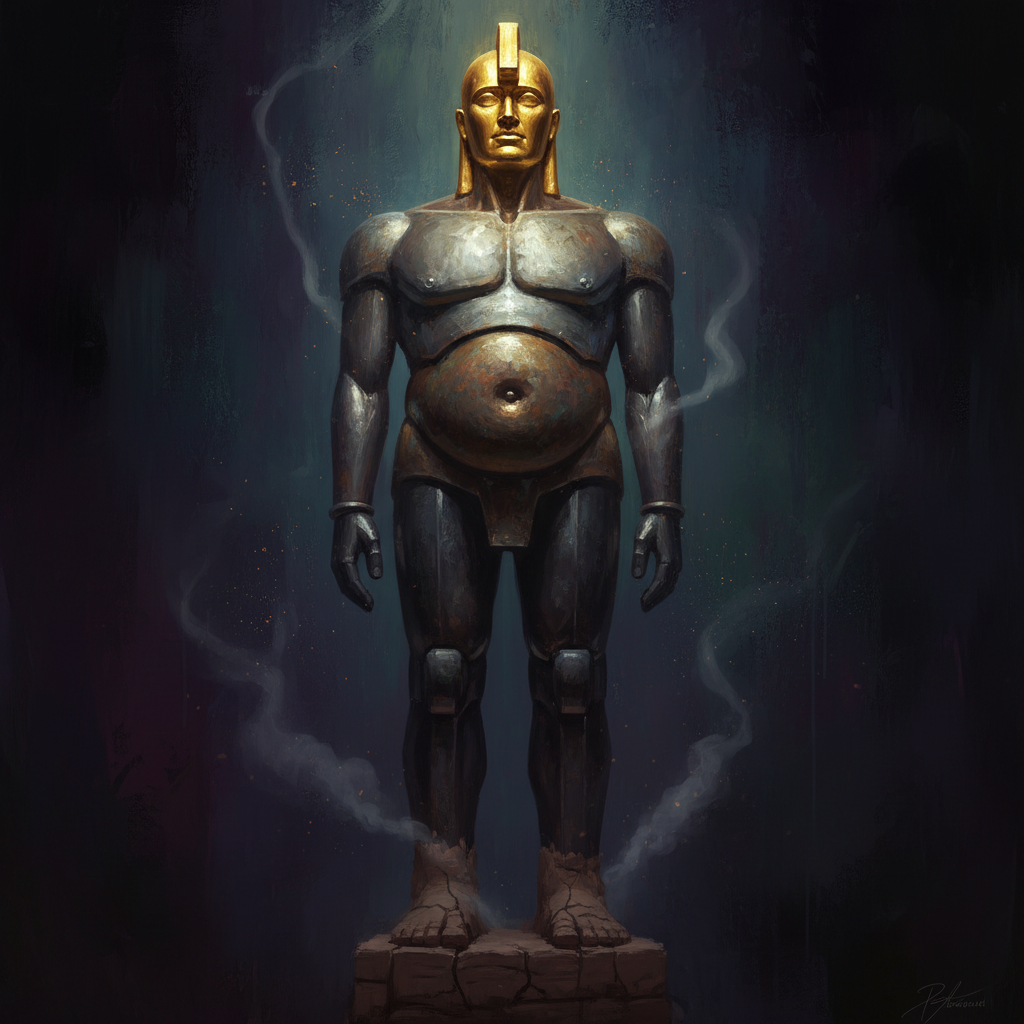
“And as the toes of the feet were part of iron, and part of clay, so the kingdom shall be partly strong, and partly broken.”
And the fourth kingdom shall be strong as iron: forasmuch as iron breaketh in pieces and subdueth all things: and as iron that breaketh all these, shall it break in pieces and bruise.
And whereas thou sawest the feet and toes, part of potters’ clay, and part of iron, the kingdom shall be divided; but there shall be in it of the strength of the iron, forasmuch as thou sawest the iron mixed with miry clay.
And as the toes of the feet were part of iron, and part of clay, so the kingdom shall be partly strong, and partly broken.
And whereas thou sawest iron mixed with miry clay, they shall mingle themselves with the seed of men: but they shall not cleave one to another, even as iron is not mixed with clay.
And in the days of these kings shall the God of heaven set up a kingdom, which shall never be destroyed: and the kingdom shall not be left to other people, but it shall break in pieces and consume all these kingdoms, and it shall stand for ever.
Why This Verse Was Tagged
This verse contains specific terms directly associated with this theme.
This verse was identified through meaning similarity — its content is mathematically close to known verses in this theme, even without sharing the same vocabulary.
Counter-Arguments
The strongest case that this verse does not belong in this theme.
Cross-References
“And the ten horns out of this kingdom are ten kings that shall arise: and another shall rise after them; and he shall be diverse from the first, and he shall subdue three kings.”
“And I stood upon the sand of the sea, and saw a beast rise up out of the sea, having seven heads and ten horns, and upon his horns ten crowns, and upon his heads the name of blasphemy.”
“And there appeared another wonder in heaven; and behold a great red dragon, having seven heads and ten horns, and seven crowns upon his heads.”